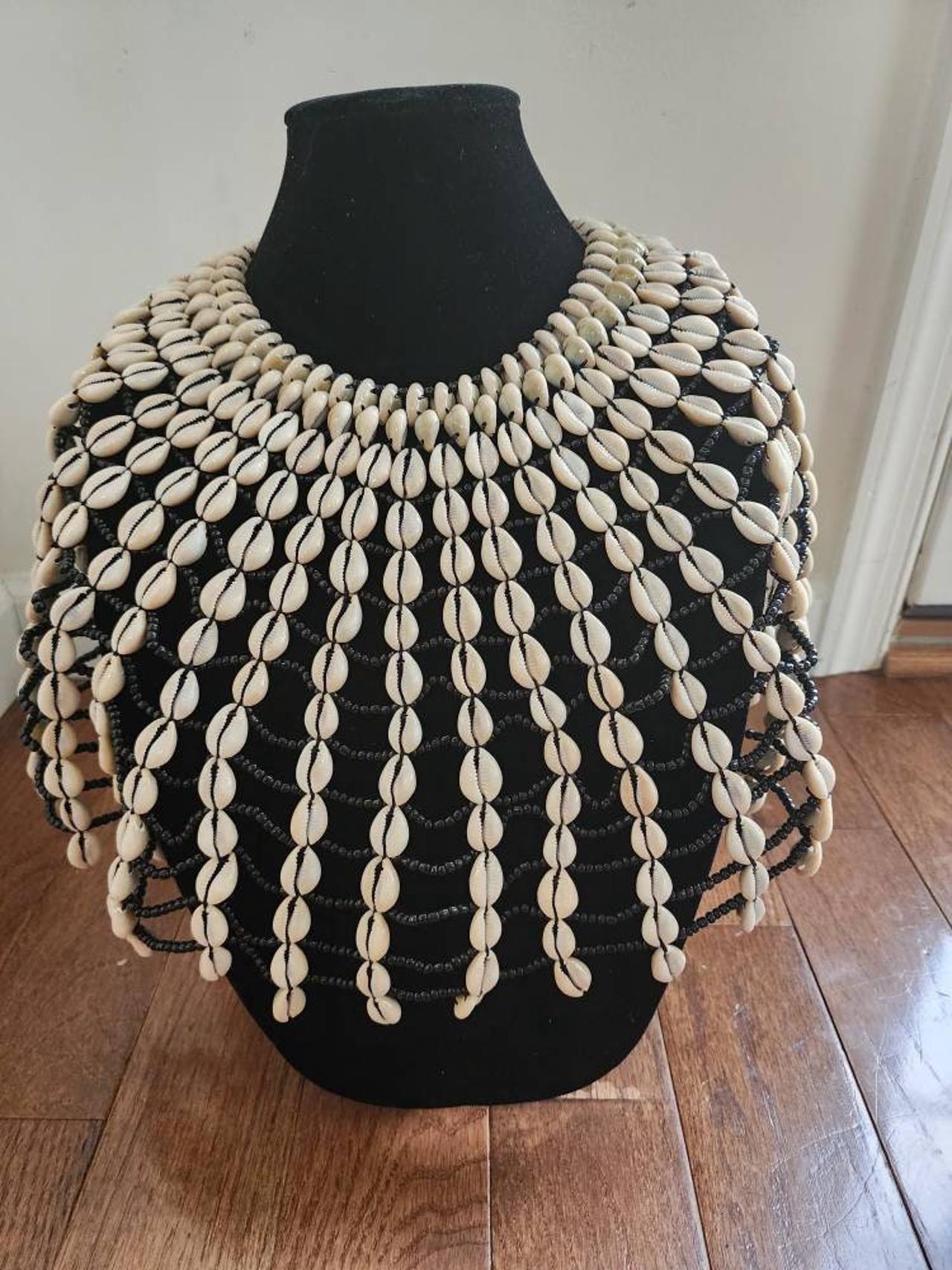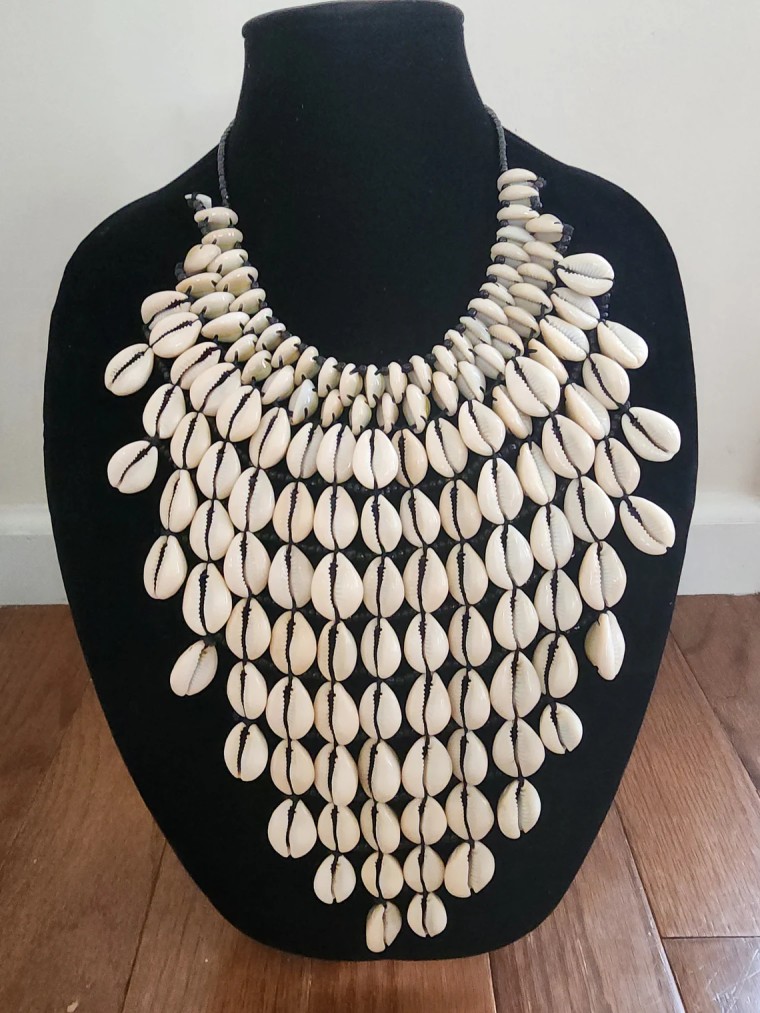
Small, shiny, and shaped like a smile, these distinctive shells are not just an ornament on a gown. They have been a part of African life for centuries. Today they symbolize beauty and their distinctive sound is generally associated with vibrancy, but long before coins and paper money became a thing, cowrie shells were the money.
Ancient Origins
As early as the Stone Age, cowries were used as jewelry, amulets, and healing objects. Strings of both real shells and gold-cast replicas were found in Egyptian tombs. They were believed to bring fertility, protection, and good fortune in the afterlife.
The Maldivian Shell Trade
The story of cowries as currency starts with the story of Queen Rehendi Khadijah, who ruled the islands of the Maldives in the 14th century. She oversaw the production and trade of these small creatures, which would then be hauled by traders across the oceans.
These precious shells began to find their way into South Asia, the Middle East, and Africa. They were hauled by traders to ports like Mogadishu, Kilwa, Zanzibar, and Sofala, where they were exchanged for gold, ivory, and other produce.
Eventually, Swahili merchants began to haul the cowries across the Sahara to North and West African trade hubs like Timbuktu and Walata. Cowries were adopted as currency by Western kingdoms like the Ashanti of present-day Ghana and the Dahomey of present-day Benin.
The value of these sea shells came from their relative scarcity and the sheer cost of hauling them all the way from the Maldives. Their use as currency continued in some of these kingdoms well into the 19th century.
Cowries and the Slave Trade
It's believed that during the slave trade, Europeans also began hauling cowries to West Africa and used them in the trading of enslaved people. Olaudah Equiano — a formerly enslaved man who later became a celebrated writer and abolitionist — described in his own 1789 memoir being traded for 172 small white shells, each no bigger than a fingernail, while still in Africa. He would go on to buy his freedom and write one of the most influential firsthand accounts of slavery in the English language.
Cowries also continued to hold a significant role in African spirituality as ornaments of worship and protection. They're found in many garments and ceremonial items used in traditional rituals across the continent.
Even in the United States, excavations around former slave plantations have uncovered cowrie shells. The quantities found don't suggest they were used as currency there — but they do suggest that some enslaved people managed to keep these shells through the grueling transit across the Atlantic, likely continuing to wear them for protection.
Cowries Today
Today, cowrie fashion symbolizes heritage, prosperity, and spiritual protection — bridging ancient African history with modern global style.
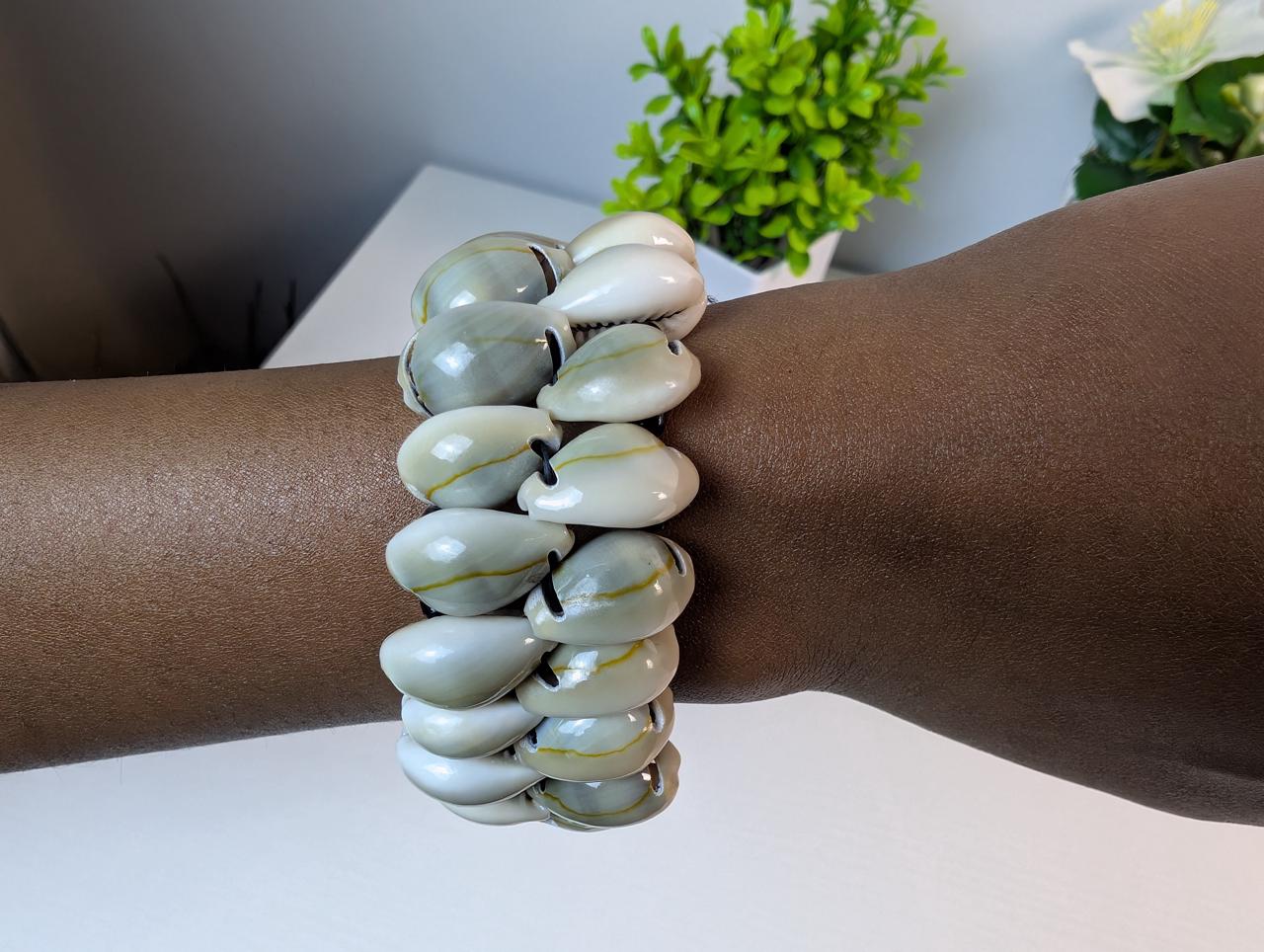
At Tarooka, our handmade cowrie shell bracelets are crafted by independent artisans carrying that same tradition forward — a small piece of this long history, made by hand, for you to wear today.
Sources: Olaudah Equiano's memoir, The Interesting Narrative of the Life of Olaudah Equiano (1789), available via Project Gutenberg; historical accounts of the Indian Ocean and trans-Saharan cowrie trade.